Conferências
posts displayed by category
nikias skapinakis Congress
Feb 19 2023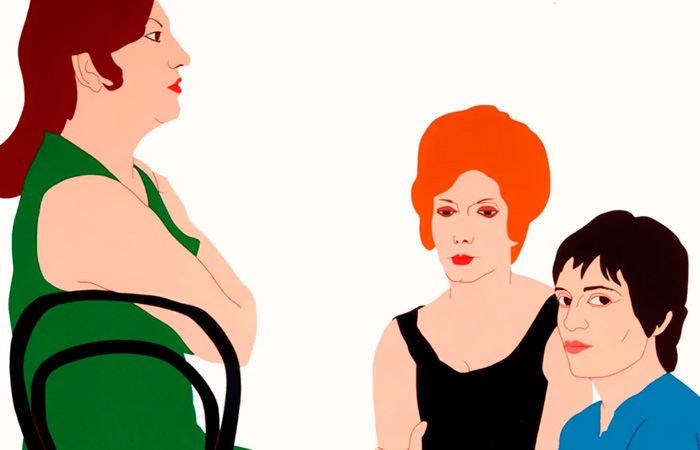
1ST > 2ND MARCH 2023 I LAGOA HENRIQUES AUDITORIUM
The National Museum of Contemporary Art (MNAC), the Faculty of Fine Arts of the University of Lisbon (FBAUL), through the Center for Studies and Research in Fine Arts (CIEBA), the Institute of Art History (IHA) of the Faculty of Social and Human Sciences of the Nova University of Lisbon (NOVA FCSH), and the Interdisciplinary Center for Gender Studies (CIEG), of the Higher Institute of Social and Political Sciences of the University of Lisbon (ISCSP-ULisboa) organize from March 1st to the 2nd, 2023, the Nikias Skapinakis Congress.
This congress pays tribute to the Portuguese artist, who died on August 26, 2020, and author of an extensive and remarkable work that unfolded through painting, drawing and engraving, with a very personal path, rooted in an interdisciplinary personal nature, whose chromatic richness and expressive is not limited to the strong focus on portrait, although he has a particularly strong focus on this theoretical and plastic path, in an analysis that underlines the relevance of different sources such as history, literature, and everyday life for his artistic creation.
Alongside the congress, MNAC will organize an exhibition of the artist, with works that Skapinakis deliberately kept in his possession, creating a personal museum of his own work. The exhibition will be curated by Helena Skapinakis and Maria Aires Silveira.
bauhaus of the sea sails
Feb 01 2023
1ST FEBRUARY 2023 I HUB CRIATIVO DO BEATO //// 2ND FEBRUARY 2023 I CALOUSTE GULBENKIAN FOUNDATION
The two-day Bauhaus of the Seas Sails kick-off event will take place on 1st and 2nd of February in Lisbon, Portugal. It will be hosted by the Municipality of Lisbon and the Calouste Gulbenkian Foundation, the project’s local partners. The main goal of the event is to present the Bauhaus of the Seas Sails project among the consortium members and showcase both local and international projects related to its research themes and interests.
Day 1 will take place at Hub Criativo do Beato and will combine keynote addresses, an artistic performance, a seaweed-based lunch, the opening of an urban design exhibition and two consortium partner workshops. A showcase of research approaches to the seas will bring to Lisbon researchers from all over Portugal, who will present their work in areas such as architecture, biology, archaeology, energy transition and climate justice.
On Day 2, consortium partner representatives and guests will gather at the Calouste Gulbenkian Foundation and explore the project’s “drops” – concrete activities and experiments that over the next three years will engage local communities on a sustainable, fair and appealing transition. Following two sessions of 15-minute presentations, which will follow the themes of “Connecting” and “Designing”, the members of this engaged audience will take part in four workshop sessions led by Bauhaus of the Seas Sails partner institutions.
cross media arts 2023
Feb 01 2023

09 > 10 FEVEREIRO 2023 I FACULDADE DE BELAS-ARTES
A partir do conhecimento e sensibilidade dos diferentes campos artísticos, sejam eles performativos, visuais ou projetuais, esperamos encontrar outras práticas e formas de colaboração para o bem comum — novas direções que são desenvolvidas através do cruzamento de uma variedade de processos inovadores.
Queremos trazer para um entendimento geral das artes, uma discussão relacionada com uma práxis que atravesse as fronteiras entre os territórios artísticos e outros saberes. Explorando a interseção de conhecimentos e metodologias, esperamos incentivar formas alternativas de representação e intervenção social, designadamente um modelo de colaboração entre criativos, makers, partes interessadas e comunidades que promovam a coesão social e cultural através de ações concretas com os cidadãos.
Convidamos artistas visuais, performers, designers, arquitetos, entre outros criativos, a partilhar e a expandir as suas práticas.
Datas importantes
15 julho 2022: Submissão de resumos.
15 outubro 2022: Submissão de artigo para revisão por pares – (1ª ronda).
15 dezembro 2022: Submissão de artigo após correções – (2ª ronda).
Registo (comunicações)
Taxa de investigador doutorado 150€.
Taxa de estudante de doutoramento 100€.
Estão isentos de pagamento investigadores dos centros CHAIA, CIEBA, UNIDCOM, CICS.NOVA e doutorandos da UÉvora, FBAUL, IADE-UEuropeia, NOVAFCSH
Inscrição
Taxa para o público em geral 25€ (apenas para assistir à sessão principal).
Inscrição gratuita para os estudantes: UÉvora, FBAUL, IADE-UEuropeia, NOVAFCSH
Inscrição gratuita para os investigadores: CHAIA, CIEBA, UNIDCOM, CICS.NOVA
Coordenação
Paula Reaes Pinto (Ed.)
Escola de Artes da Universidade de Évora
António Gorgel Pinto (Ed.)
IADE, Universidade Europeia
Sérgio Vicente (Ed.)
Faculdade de Belas Artes da Universidade de Lisboa
Organização
CHAIA
Universidade de Évora
UNIDCOM
IADE, Universidade Europeia
CIEBA
Universidade de Lisboa
Contacto: xmediarts23@uevora.pt
chiado, carmo, paris. “soirée chez lui”. desassossego e apropriação —ŁÓDŹ, polónia
Dec 12 2022
15 NOVEMBRO > 15 DEZEMBRO 2022 I AULA GALLERY AKADEMIA, ŁÓDŹ, POLÓNIA
LISBOA, ÉVORA, PARIS, ŁÓDŹ, FLORENÇA | 2022
Inaugura no dia 15 de novembro, mais uma exposição relativa ao Chiado, Carmo, Paris. “Soirée chez lui”, desassossego e apropriação, na Aula Gallery Akademia em Lodz, na Polónia, projecto integrado na “Temporada Portugal França 2022”, com ancoragem na Casa de Portugal, em Paris.
O evento é passível de ser registado e divulgado pela Faculdade de Belas-Artes através de fotografia e vídeo
Foi no dia 17 de fevereiro que inauguraram as primeiras três EXPOSIÇÕES relativas ao Chiado, Carmo, Paris. “Soirée chez lui”, desassossego e apropriação, projecto integrado na “Temporada Portugal França 2022” com ancoragem na Casa de Portugal, em Paris.
A primeira inauguração realizou-se às 17h00 no Jardim de Esculturas do MNAC, a segunda às 18h00 na FBAUL, e a terceira às 19h00 no Museu Arqueológico do Carmo.
Trata-se da apresentação pública de obras de dezenas de estudantes, professores e investigadores do ensino artístico superior, no sentido do alargamento das potencialidades plásticas da obra de Columbano, Soirée chez lui, cruzando alguns dos seus referentes plásticos e semânticos com a “efervescência” e o desassossego dos artistas da FBAUL e da Universidade de Évora. Por analogia, atendendo ao âmbito internacional do projecto expositivo, os artistas polacos (Lodz) e italianos (Florença) abordam a intermedialidade entre as artes visuais e as artes performativas a partir de autores das respectivas culturas, nomeadamente a pintura “Chopin’s Polonaise”, de Teofil Kwiatkowski, e a escultura “Ofelia”, de Arturo Martini.
No mesmo dia realizou-se um ciclo de CONFERÊNCIAS no MNAC sobre a pertinência da obra de Columbano, incluindo o lançamento de um livro/catálogo com vários ensaios dedicados à obra do pintor português, assim como ao domínio das artes na esfera pública.
Para informação mais detalhada sobre a vasta programação que se inicia neste dia e que culminará em Florença, no fim de 2022, sugere-se a consulta do site e do Instagram da Faculdade de Belas Artes de Lisboa, do Museu Nacional de Arte Contemporânea, e do Museu Arqueológico do Carmo.
Após a consulta de todos os temas e autores que constam no PROGRAMA, poderão, em função dos vossos interesses, fazer as inscrições nos diversos ciclos de conferências através da plataforma digital da FBAUL.
Evento passível de ser fotografado e filmado para posterior divulgação.
INSCRIÇÃO NOS CICLOS DE CONFERÊNCIAS
A inscrição é obrigatória em cada uma das conferências.
Museu Nacional de Arte Contemporânea (17 de fevereiro de 2022) /INSCRIÇÕES ENCERRADAS
Grémio Literário (16 de Março de 2022) / INSCRIÇÕES ENCERRADAS
Museu Nacional Frei Manuel do Cenáculo, Évora (03 de Maio de 2022) INSCRIÇÕES ENCERRADAS
Casa de Portugal, Paris, França (20 de Maio de 2022) INSCRIÇÕES ENCERRADAS
Informa-se que, devido à situação atual de pandemia e a novas medidas de controle, os ciclos de conferências poderão ser realizados através da plataforma zoom.
now available the e-book ON PORTRAITURE. Theory, practice and fiction. From Francisco de Holanda to Susan Sontag
Dec 11 2022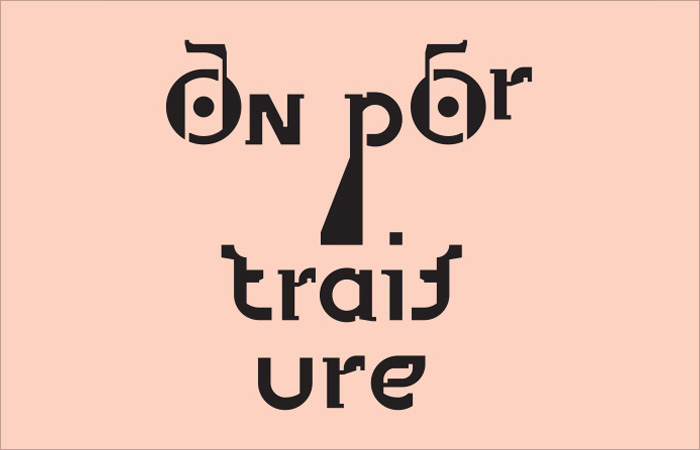
18, 19 and 20 January 2022 | Faculty of Fine-Arts, University of Lisbon
EVENT EXCLUSIVELY ONLINE
NOW AVAILABLE THE E-BOOK OF THE CONGRESS!
NOTE: when you open the link, please scroll down on the page, and you will find the file for dowload.
REGISTRATIONS CLOSED
PITCH SESSION
The Authors of the selected communications were invited to participate in a pitch session, where they made a brief presentation of their communications.
WATCH HERE the recording of this session, which took place online on January 18, 2021.
NOTE: It is not allowed to reproduce images or texts presented in this video, in whole or in part, without authorization from the authors and editors.
INTRODUCTION AND PRINCIPLE OBJECTIVES OF THIS CONGRESS
This colloquium intends to discuss the theory and practice of artistic, historical, anthropological, social and political experience on the topic of portraiture, as well as the fictional dimension contained within it. Located at the intersection of several disciplinary fields, the discussion(s) and papers will address the portrait as a concept, theme, process, object (monument and document) and device, in its multiple developments and in its successive conceptual, technological and contextual updates.
More than defining a temporal framework, the subtitle – From Francisco de Holanda to Susan Sontag – underscores the dynamic porosity on the researched topic in the fields of art and literature, as well as, in its mutual reversibility.
Francisco de Holanda, humanist and 16th-century Portuguese artist, is the author of Do Tirar pelo Natural [On Portraiture], the first treatise dedicated to portraiture in early modern Europe, which he concluded in 1549, in the decade following his return from a trip to Italy undertaken in 1538 to 1540, as member of the embassy of Ambassador D. Pedro de Mascarenhas. One objective for Holanda was to meet Michelangelo Buonarroti, in addition to observing and drawing fortresses and the most outstanding works of art across Italy. Upon his return, Holanda undertook writing Da Pintura Antiga [On Ancient Painting], concluded on October 13 (St. Lucas Day) 1548, as it is written at the end of Book II, followed by his second treatise, Do Tirar polo Natural [On Portraiture]. These two works were prepared for publication and were even translated into Spanish in 1563, by his friend, the Portuguese painter Manuel Denis. These treatises, written almost simultaneously, would only see publication, in Portuguese and Spanish, only in the 19th century. At the end of the Do Tirar polo Natural [On Portraiture], Holanda states that the text was completed on January 3rd, 1549, only a few months after the completion of the two Books of Da Pintura Antiga [On Ancient Painting]. In fulfilment of John B. Bury’s ground-breaking research, a bilingual edition of this portrait treatise, published by Paul Holberton Publishing in London, will be presented during this Congress.
Indeed, the two great pillars of Francisco de Holanda’s theory of art – the imitation of himself, nature and antiquity on one hand, and idea, on the other – have, precisely, as a point of departure, the artist’s creative process which Holanda discusses in his first two treatises. The importance of Do Tirar polo Natural [On Portraiture] for the theory of art, which Holanda explains and abundantly illustrates in his two books in On Ancient Painting, as well as in his drawings and illuminated albums, especially in As Antigualhas [On the Antique], makes Holanda’s need to write a portrait treatise fully justified. As an autonomous work, Do Tirar polo Natural [On Portraiture], complements Da Pintura Antiga [On Ancient Painting]. This treatise’s structure, in the form of dialogues, follows the model used in Book II of Diálogos em Roma [Dialogues in Rome], but here, instead of many interlocutors, is reduced to conversations between two protagonists, Brás Pereira and Feramando, the disciple and master, as well as the alter ego of Holanda. The themes and issues defined in Do Tirar polo Natural [On Portraiture], extend, deepen and, above all, specify in detail questions regarding portraiture; themes related to the representation of the human figure which Holanda took up in Chapters 38 to 41 in Book I of Da Pintura Antiga. These chapters lack the decisive contributions, which throughout the eleven, small dialogues of Do Tirar polo Natural [On Portraiture], Holanda describes as precepts for a painter to “portray” or “paint from life” the “persona” of a sitter. In Do Tirar, Holanda distinguishes the portrait as distinctive from other representations of the human figure.
In The Volcano Lover, Susan Sontag begins with documentation related to three historical figures from the 18th century, expanding them into a fictional extension where they appear as characters or doubles; emerging as figures stabilized in the credibility of portraits, thus questioning their presence throughout the history of art and the history of images. These figures are the diplomat, collector and volcanologist William Hamilton, his wife Emma Hamilton, lover of Admiral Nelson and the muse of the painter George Romney and Admiral Nelson. The portraits directly refer to those of William Hamilton, made by Joshua Reynolds, and those of Emma Hamilton, made by George Romney and Élisabeth Vigée-Lebrun. The questions asked regard the genesis of the sensitive body, in the example of the statue of Condillac, and the metamorphosis of the statue in the myth of Pygmalion; the metamorphosis of beings in the morphological accidents of the earth and in natural objects that retain their name and history; the ideal portrait; the impossibility of describing the beauty of a face or a body, delegated to the rhetorical artifice of metaphor; the portrait as a theme and as a model; the genre of statues: action and stillness, narcissism and modesty; effigies: symbolic death; cameos: miniaturization of the portrait, living picture: representation staged inside a box or in a place surrounded by the frames of the paintings; the body in pose: support and object of the representation of a representation; the body as the embodiment of the work; the ephemerality of the body and the perpetuity of the portrait; the figure, the portrait and the recognition that erases or illuminates the name. And the ruin of it all, because ruin is the inevitable destiny of human bodies and their representations, some and others relegated to the future of our time.
THEMATIC LINES
In conjunction withthese topics the main thematic lines of the colloquium are defined as:
- The portrait as a place and the place of the portrait in the visual culture of all periods
- Time and trans-temporality in and of the portrait
- The portrait as theory and the theories of the portrait
- The portrait as fiction
In the transversality of these lines, the following sub-themes are proposed:
The body and the portrait; Portrait: presence and representation; Portrait, self-portrait and self-representation; The expanded portrait: media, intermediary and mediation; Portrait: iconism, symbolism and similarity; Metonymic portrait; Portrait galleries; The portrait as a connotative place; The double and the portrait; The portrait and the mask; Portrait and genre: the collector and the collection; Portrait and gender: the artist and the model; Portrait: celebration and power; Portrait: celebration of anonymity; Portrait: show and monstrosity; The statistical portrait; Avatar: copy without original; The Impossible Portrait; The composite portrait; Portrait: the desecration of the body.
Keynote speakers will be selected according to the sessions formed from the submitted proposals and the thematic lines of this congress.
OFFICIAL LANGUAGES
The official languages are Portuguese, English, French, Italian and Spanish.
ORGANIZATION
INSTITUTES
CIEBA – Artistic Studies Research Centre, Faculty of Fine Arts, University of Lisbon
PRESIDENT
Annemarie Jordan Gschwend
VICE PRESIDENTS
Maria João Gamito (CIEBA/FBAUL)
Fernando António Baptista Pereira (CIEBA/FBAUL)
HONOUR COMITTEEE AND SCIENTIFIC COMMITTEE
The final selection of the honorary and scientific committees (see HERE) will be determined according to the quality and thematic diversity of the submitted proposals.
EXECUTIVE
Alice Nogueira Alves
Ana Mafalda Cardeira
Glória Nascimento
Jorge dos Reis
Liliana Cardeira
Marta Frade
Maria Teresa Sabido
Teresa Teves Reis
FINAL PROGRAM (to be determined)
The opening of the Congress will be given by Annemarie Jordan Gschwend and the closing session by Professor Fernando António Baptista Pereira.
NOTE: During the Congress, Francisco de Holanda’s treatise, Do tirar pelo natural / On Portraiture (Paul Holberton Publishing, London), translated and with an introductionby John B. Bury, and edited by Annemarie Jordan-Gschwend and Professor Fernando António Baptista Pereira, will be presented.
INFORMATION:
CONTACTS
onportraiture.congress@belasartes.ulisboa.pt
VENUE
FACULDADE DE BELAS-ARTES DA UNIVERSIDADE DE LISBOA
Largo da Academia Nacional de Belas-Artes – 1249-058, Lisboa, Portugal
l encontro me.av ulisboa — que futuro nas artes visuais?
Dec 01 2022
10 DEZEMBRO 2022 > 9H00 I AUDITÓRIO LAGOA HENRIQUES
No próximo dia 10 de dezembro, sábado, realiza-se no Auditório Lagoa Henriques da Faculdade de Belas-Artes da Universidade de Lisboa, o I Encontro do Mestrado em Ensino das Artes Visuais com o tema “Que futuro nas Artes Visuais?”.
Os objetivos deste encontro visam proporcionar, junto da comunidade académica, uma oportunidade de reflexão sobre questões atuais da educação e da formação de professores, bem como, promover um contexto favorável ao desenvolvimento do trabalho em curso, e contribuir para a criação de uma identidade do MEAV_ULisboa.
As INSCRIÇÕES são gratuitas, mas OBRIGATÓRIAS, e devem ser realizadas até 3 de dezembro.
Para obter mais informações contactar encontromeav@belasartes.ulisboa.pt
towards a common heritage
Dec 01 2022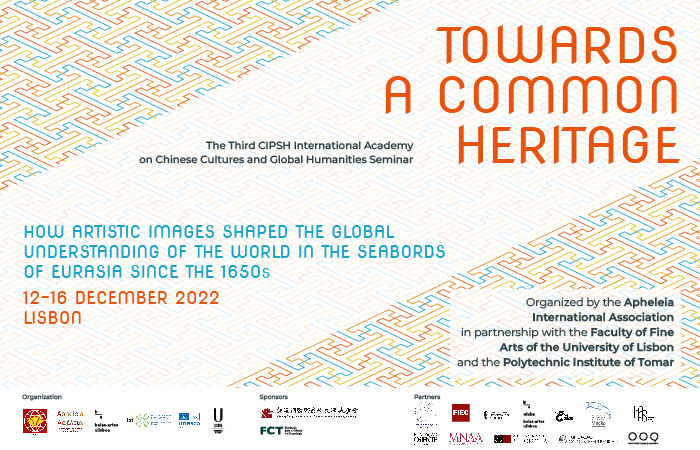
12 > 16 DEZEMBRO 2022 I GRANDE AUDITÓRIO FACULDADE BELAS-ARTES
The Third CIPSH International Academy on Chinese Cultures and Global Humanities Seminar
Towards a Common Heritage: How artistic images shaped the global understanding of the world in the seabords of Eurasia since the 1650s
Organized by the Apheleia International Association in partnership with the Faculty of Fine Arts of the University of Lisbon and the Polytechnic Institute of Tomar
The International Council for Philosophy and Human Sciences (CIPSH) organizes annualy an International Academy on Chinese and Asian cultures and Global Humanities (IACAGH), with the generous support of the Chiang Ching-kuo Foundation for International Scholarly Exchange (CCKF). The IACAGH programmes symposia focusing on specific themes to promote dialogue between participating academic communities.
We call for the participation of reputed scholars and promising postgraduate students to foster future research. The seminar is organized by the International Association for Humanities and Cultural Integrated Landscape Management (APHELEIA), in partnership with the Faculty of Fine Arts of the University of Lisbon (FBA-UL) and the Polytechnic Institute of Tomar (IPT).
In continuum with the the 2020 and 2021 editions, devoted to a series of high-level seminars focusing on “Global Ethics”, the 2022 seminar Towards a Common Heritage, emphasises on How artistic images shaped the global understanding of the world in the seabords of Eurasia since the 1650s. Lisbon, a western European seabord capital city, welcomes this event between 12 and 16 December, 2022 in a double-format of Conferences and Study Visits, leading to the publication of the Conference proceedings by the CIPSH in 2023. For this seminar, the IACAGH considers artistic and a range of related intellectual expressions from the mid-seventeenth century to the present.
In his seminal essay On the Concept of History (1942), Walter Benjamin argued that the understanding of the world is primarily structured through images, which encapsulate a dimension for redemption that is conveyed by time, or the past. This seminar builds on his approach and looks at processes that gained momentum since the dawn of Modern Age to the present, in order to evaluate the global acceleration of material culture and the arts. Simultaneous with increasingly global exchange routes, contradictory cultural processes were equally triggered, especially those pertaining to the rise and identity of modern nations. Yet, common ground was equally founded, gradually leading to the construction of world images signifying its interconnected system and, as argued by Shmuel Trigano in “The Paradigm of the Human in Humanity”, in Diogenes (2002), of Humanity as a unity of meaning free from ethnocentric divisions. Most often departing from different cultural perspectives, both in Europe and in China, images denoted the interplay between landscapes and humans, possibly leading towards a growingly convergent understanding of those interplays.
The Seminar Towards a Common Heritage asks how artistic images impacted social dynamics, the contruction of world images—past, present and future—and how art shaped historical perceptions of space and landscape since the 1650s.
6º Colóquio Expressão Múltipla
Dec 01 2022

Beatriz Manteigas, Macacos amestrados IV, 61x42cm, técnica mista sobre papel, 2020
13 > 14 DEZEMBRO 2022 | VIA ZOOM
LINK ZOOM para assistir ao Colóquio:
https://videoconf-colibri.zoom.us/j/99614441498?pwd=WEtSeTFsOHhkZkJFUFBGWFdhcnBSdz09
PROGRAMA (sujeito a alterações)
Este congresso visa proporcionar uma visão abrangente sobre a investigação na área do Desenho. Divide-se em duas chamadas de trabalho com vista a duas publicações anuais e a um colóquio/congresso.
A primeira chamada é dirigida ao Desenho Aplicado. Por Desenho aplicado entendem-se todas as vertentes em que o desenho é um elemento central, sendo, no entanto, concretizado com outros fins que não ele próprio. Assim áreas do desenho como as da concept art, ilustração, animação, desenho digital, realidade virtual, desenho de produção, entre outras, serão os maiores alvos nesta iniciativa. É por isso dirigida aos estudiosos que pretendam seguir, ou que já estejam a desenvolver trabalho nestas áreas, de maneira a permitir uma disseminação de experiência e de resultados.
A segunda chamada é dirigida à Teoria e Prática do Desenho num âmbito mais geral onde as suas relações com a arte e com os processos artísticos são investigadas.
O colóquio é dirigido sobretudo aos estudiosos que procuram desenvolver dissertações e teses na área do Desenho ou noutras que possam de alguma forma ampliar as discussões relativas a estas áreas de conhecimento. Pretende-se a disseminação das diversas experiências, metodologias e resultados. Aos interessados em participar convida-se à submissão de resumos relativos a comunicações orais a serem apresentadas no colóquio assim como os respetivos artigos atendendo à especificidade das chamadas de trabalhos.
Todos os resumos e artigos serão submetidos a uma revisão peer review. Os resumos aprovados serão impressos na ocasião do colóquio e os textos completos serão publicados online separadamente em duas revistas no Repositório da Faculdade de Belas-Artes da Universidade de Lisboa.
O colóquio, a ter lugar entre 13 e 14 de dezembro de 2022 no Grande Auditório da FBAUL, será composto por comunicações de 20 minutos e por um posterior momento para resposta a questões do público. Está prevista a abertura do colóquio/congresso com a presença de um ou dois keynotes.
Cada artigo recebido pelo secretariado é reenviado, sem referência ao autor, a dois ou mais membros da Comissão Científica, garantindo-se no processo o anonimato de ambas as partes (double-blind). No procedimento privilegia-se a distância geográfica entre a origem de autores e a dos revisores científicos.
Coordenação
Artur Ramos – Universidade de Lisboa (Expressão Múltipla)
Henrique Costa – Universidade de Lisboa (EM: Desenho Aplicado)
Comissão Organizadora
Artur Ramos – Universidade de Lisboa
Henrique Costa – Universidade de Lisboa
António Trindade – Universidade de Lisboa
Domingos Rego – Universidade de Lisboa
Beatriz Manteigas – Universidade de Lisboa
Gabriela Torres – Universidade de Lisboa
Comissão Científica 2021
Artur Ramos – FBAUL
Américo Marcelino – FBAUL
António Trindade – FBAUL
Henrique Costa – FBAUL
Filipe Abreu – FBAUL
António Canau – FAUL
Armando Jorge Caseirão – FAUL
José Maria da Silva Lopes – Universidade do Porto
Luís Fortunato Lima – Universidade do Porto
Miguel Bandeira Duarte – Universidade do Minho
Natacha Antão Moutinho – Universidade do Minho
Rita Carvalho – Universidade Lusófona de Humanidades e Tecnologias
Daniel Bilbao Peña – Universidade de Sevilha
Miguel Ángel Bastante Recuerda – Universidade de Sevilha
Simón Arrebola-Parras – Universidade de Sevilha
Alexandre Guedes – Universidade Federal Rural do Rio de Janeiro UFRRJ
Aline Basso – Universidade Federal do Ceará UFC
Sílvia Rosado – IADE
Dilar Pereira – CIEBA
Tiago Batista – FBAUL
Maria Prieto – Universidade Lusófona de Humanidades e Tecnologias
Inês Garcia – ESE
CALENDÁRIO:
Primeira chamada de trabalhos: Desenho Aplicado
1ª Fase – Submissão de propostas: envio de resumos provisórios*
Até 3 de maio, data limite para o envio do resumo;
Até 10 de maio, notificação de pré-aceitação ou recusa.
2ª Fase – Envio de artigos completos*
Até 21 de junho envio do artigo para revisão;
Até 30 de junho, notificação de conformidade ou recusa.
Segunda Chamada de trabalhos: Teoria e Prática do Desenho
1ª Fase – Submissão de propostas: envio de resumos provisórios*
Até 18 setembro, data limite para o envio do resumo;
Até 25 setembro, notificação de pré-aceitação ou recusa.
2ª Fase – Envio de artigos completos*
Até 20 de novembro, envio do artigo para revisão;
Até 30 de novembro, notificação de conformidade ou recusa.
Informações sobre as comunicações orais
*Os resumos e artigos deverão ser enviados para expressaomultipla@gmail.com segundo a seguinte formatação:
Formato do Resumo
O resumo poderá ter até 2.000 carateres sem espaços e incluir uma ou duas ilustrações. Devem ser indicadas três palavras-chave.
Formato do Artigo
Cada artigo deverá ter entre 10000 e 15000 caracteres sem espaços referentes ao corpo do texto, isto é, sem contar com o título, resumo, palavras-chave, legendas e bibliografia. O documento deve ser enviado em formato word.
- Título: Fonte Times New Roman, tamanho 14, maiúsculas, negrito, centralizado.
- Afiliação: Nome do autor e respetivo centro de estudos. Times New Roman, tamanho 12.
- Resumo e palavras-chave: Times New Roman, até 600 caracteres sem contar com os espaços, tamanho 12, espaçamento simples, parágrafo justificado.
- Abstract e keywords: Em inglês, Times New Roman, até 600 caracteres sem contar com os espaços, tamanho 12, espaçamento simples, parágrafo justificado.
- Subtítulos: Fonte Times New Roman, negrito, tamanho 12.
- Corpo de texto: Times New Roman, tamanho 12, espaçamento 1,5. Parágrafo justificado.
- Legendas: Numeradas, Times New Roman, tamanho 10.
- Referências Bibliográficas: Devem seguir o Modelo APA ou NP 405. Fonte Times New Roman, tamanho 12 (APA), 10 (NP 405) espaçamento simples.
- Até 10 imagens: Inseridas no correr do texto, legendadas e referidas (atenção aos direitos de autor).
THE MATERIALITY OF MODERNISM — THIRD INTERNATIONAL CONFERENCE CENTER FOR EUROPEAN MODERNISM STUDIES 2022
Dec 01 2022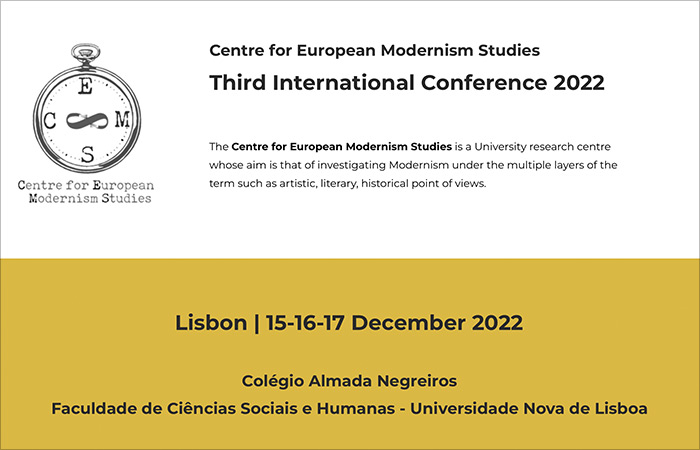
15 > 17 DECEMBER 2022 I COLÉGIO ALMADA NEGREIROS, FCSH – UNL
The Centre for European Modernism Studies is a University research centre whose aim is that of investigating Modernism under the multiple layers of the term such as artistic, literary, historical point of views.
first Virtual Reality Animation Conference
Dec 01 2022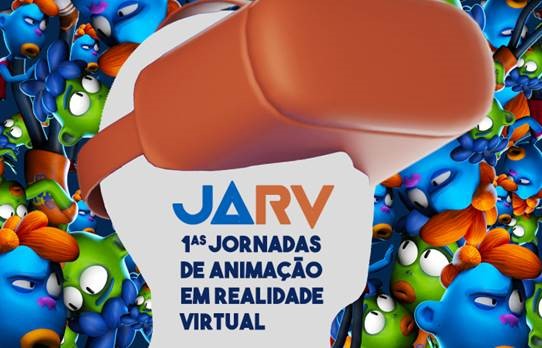
15TH DECEMBER 2022 > 11 AM I LAGOA HENRIQUES AUDITORIUM
We invite all researchers and professionals to participate in the first Virtual Reality Animation Conference. The Conference will take place in the Faculty of Fine Arts at the University of Lisbon on December 15th, 2022.
The talks will discuss theoretical, historical, technological and artistic levels of animation within virtual reality. The conferences aims to facilitate international dialogue between researchers and professionals with interests in virtual reality.
The Conference will consist of a set of scientific, professional talks, workshops and a Game Jam, which will have a hybrid format (physical and online) taking place on December 15th, 2022.
The acceptance of the abstracts’ submission must fit the following themes: VR Production, VR Animation and Art theory applied to VR Animation and must be submitted till November 30th, 2022 through the following form from the link below.
l Seminário Internacional luso-brasileiro património, cultura, identidade e museologia
Nov 28 2022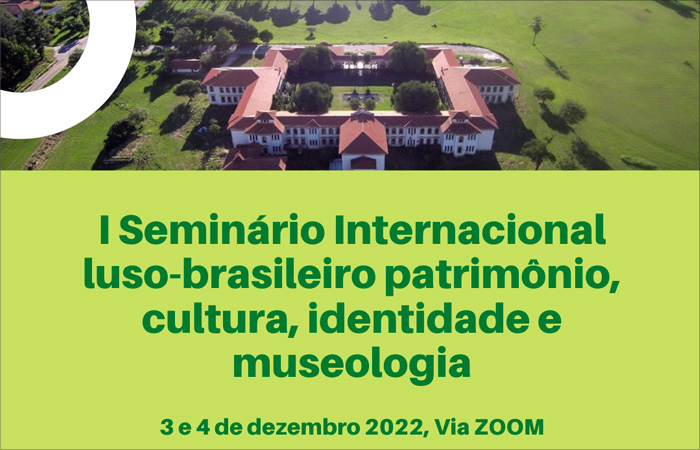
03 > 04 DEZEMBRO 2022 > 12H00 I VIA ZOOM
Realiza-se via ZOOM, nos dias 3 e 4 de dezembro, a partir da 12h00 o “I Seminário Internacional luso-brasileiro património, cultura, identidade e museologia”, organizado pelos alunos do Mestrado de Museologia e Museografia da Faculdade de Belas-Artes da Universidade de Lisboa e os alunos do Programa de Pós-Graduação em Patrimônio, Cultura e Sociedade, da Universidade Federal Rural do Rio de Janeiro.
lançamento do nº 5 da riact e ciclo internacional de conferências sobre Investigação artística
Nov 20 2022
30 NOVEMBRO > 13H20 I VIA ZOOM
Comunica-se o lançamento da RIACT nº5, no dia 30 de novembro, edição dedicada à Investigação Artística em domínios partilhados pela Pintura e pela Dança, cujo título é: Investigação artística da ‘projecção espacial’ e da ‘plasticidade corporal’ nos campos da dança e da pintura. Esta edição também inclui uma entrevista ao Pintor e Professor Catedrático António Quadros Ferreira.
Na mesma tarde realiza-se um Ciclo Internacional de Conferências designado: Artistic Research on ‘spatial projection’ and ‘body plasticity’ in dance and painting, com a participação de diversos especialistas entre os quais Naomi Lefebvre Sell (Trinity Laban Conservatoire, Londres) e Fernando Duarte (Director artístico de Dança em Diálogos), além de outros, como pode ser observado no Cartaz-PROGRAMA.
As conferências realizam-se através da plataforma ZOOM.
Projetos e Processos da Pintura – Ciclo de Conferências
Nov 10 2022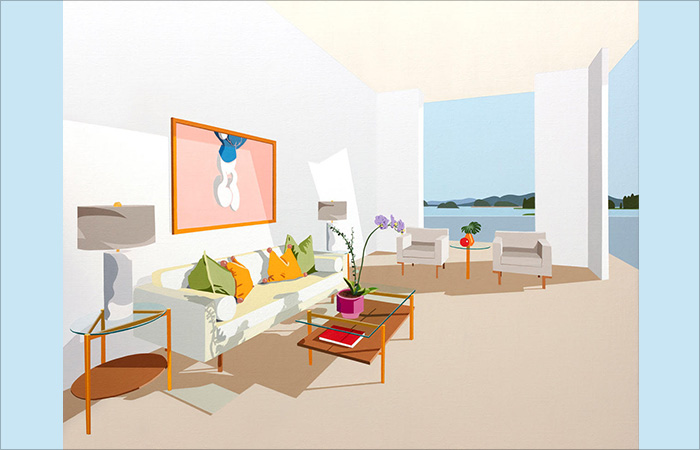
José Lourenço, 2020, s/ título, acrílico sobre tela, 80×100 cm
1ª CONFERÊNCIA – 25 NOVEMBRO 2022 > 10H00 I SALA 3.41
Entrada livre condicionada à capacidade da sala
Projetos e Processos da Pintura
Este Ciclo de Conferências pretende ser um espaço onde se privilegia o conhecimento na área da experimentação, investigação e o contacto com problemáticas associadas ao projeto, de forma a construir uma base de conhecimentos, sobre várias técnicas e materiais, no âmbito do exercício projetual da Pintura.
Promover a aproximação às práticas artísticas profissionais através de convidados na área de intervenção da Pintura.
Proporcionar, aos estudantes de vários anos de formação, o aprofundamento de metodologias e processos operativos da pintura nas diversas tecnologias associadas ao processo pictórico.
1ª Conferência
Métodos operativos e técnicos da pintura como meios tradutores do universo pictórico
O artista José Lourenço nasceu em Lisboa no ano de 1975.
É Licenciado em Pintura pela Faculdade de Belas-Artes de Lisboa.
Exibe o seu trabalho desde 1995 e está representado em várias coleções nacionais e internacionais, nomeadamente na Fundação PMLJ, Museu de Arte Comtemporânea Union Fenosa – MACUF, Fundação Pedro Barrié de la Maza, Coleção Norte de Arte Contemporânea – Governo de Cantábria, Barclays Bank, entre outras. Site: www.joselourenco.art ; Instagram: @joselourenco
Nadir Afonso: Arquiteto e Pintor
Nov 10 2022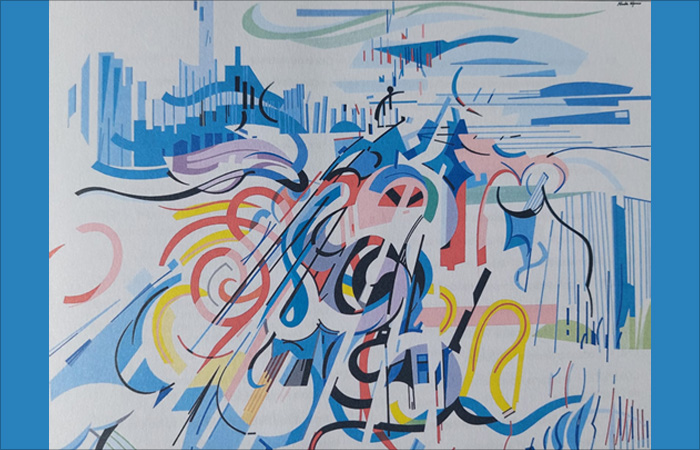
21 NOVEMBRO 2022 > 15h30 |GRANDE AUDITÓRIO, FACULDADE DE BELAS-ARTES
Com o encontro “Nadir Afonso: Arquiteto e Pintor” aborda-se o percurso do artista e a necessidade de preservar e divulgar o seu legado.
Conta com a presença de Fernando António Batista Pereira, Laura Afonso, Mila Simões de Abreu, Jorge Rodrigues, Luís Jorge Gonçalves, Cláudia Matos Pereira, Dalton Sala, entre outros.
Será apresentado o livro “A Panificadora de Vila Real de Nadir Afonso: crónica de uma demolição” e será exibido o filme “1965, PANREAL UM EDIFÍCIO DE NADIR AFONSO”.
Nadir Afonso: Arquiteto e Pintor
Nadir Afonso (1920-2013), o Arquiteto e o Pintor, continua presente no nosso quotidiano, através das suas obras: Estação de Metro dos Restauradores, em Cascais, na Panificadora de Chaves, entre outros locais.
O arquiteto trabalhou nos ateliês de Le Corbusier e de Oscar Niemeyer, que foram absorvidos pelo seu olhar. Foram marcantes para o jovem que saiu de Chaves. Passou pelo Porto, Paris, Rio de Janeiro e São Paulo. Voltou a Paris e fixou-se em Cascais. As cidades foram o seu mundo. Na arquitetura deixou a tridimensionalidade nas cidades. Na pintura ficaram os registos de cidades em movimento.
Na cidade de Vila Real legou-nos a Panificadora Panreal, uma fábrica de pão, que transformou em uma Catedral do nosso principal alimento. Infelizmente destruída recentemente, com a passividade das autoridades públicas. Vila Real e Portugal ficaram mais pobres. Naquele edifício estava Le Corbusier e, sobretudo, Oscar Niemeyer, os deuses da arquitetura do século XX, depurados por Nadir Afonso. Era um marco, na nossa arquitetura, que devíamos honrar.
Entrada livre sujeita à lotação da sala.
O evento é passível de ser fotografada e/ ou filmado para posterior publicação das imagens.
International Conference “Photography in-between Science, Art and Philosophy”
Nov 10 2022
NOVEMBER 26 2022 > 09.30 AM I AUDITORIUM LAGOA HENRIQUES
Photography has been the object of several theories, working with concepts as diverse as apparatus in the political/cultural approach by Vilém Flusser, as punctum and studium proposed by Roland Barthes, as psychoanalytic symptom advanced by Didi-Huberman, as aura (fetish) by Walter Benjamin, or as world-image by Susan Sontag.
However, all theories point to the same evidence: the complex reality, the several dimensions, of photography. Photography has the capacity to capture and perceive the world, that is, it can, at the same time, absorb the world and understand it. Simultaneously, it encloses a fundamental play between its (apparent) passivity and its transformative effects, between its (questionable) impartiality and its critical power. Photography has yet another dimension, that of being a transcendental exercise: when thinking about the world, photography thinks of itself as an image.
This colloquium aims at thinking photography from the perspectives of Science, of Art and of Philosophy. To analyse theories, techniques, and practices. To approach scientific photography, artistic photography, and new technologies. In a world full of images and multiple techniques for capturing and producing images, it is imperative, more than ever, to think photography.
Orador convidado
Rob Kesseler (Central Saint Martins)
Rob Kesseler is a visual artist and Emeritus Professor of Arts, Design & Science at Central Saint Martins, London. For the past twenty years he has worked with botanical scientists and molecular biologists to explore the living world at a microscopic level. Using a range of complex microscopy processes he creates multi-frame composite images of plant organs. Collaborators include The Jodrell Laboratory Kew, The John Innes Centre, Norwich, MRC Cambridge and the Max Planck Institute for Plant Breeding Research, Cologne. He works from studios in London and Corfu and exhibits and lectures internationally.
Informações
A participação no colóquio é gratuita mas carece de INSCRIÇÃO.
Entrada livre mediante inscrição e condicionada à capacidade do auditório.
Debate em torno do livro Vida a Crédito – Arte Contemporânea e Capitalismo Financeiro (Tomás Maia)
Nov 10 2022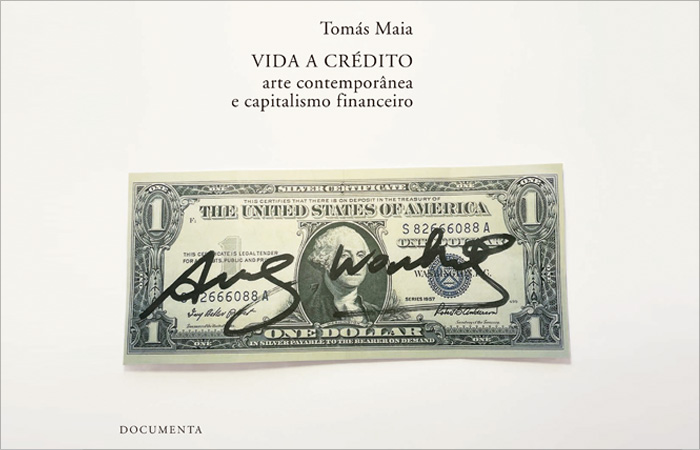
25 NOVEMBRO 2022 > 10h00-13h00 I AUDITÓRIO LAGOA HENRIQUES
Com a presença de Tomás Maia, Fernando António Baptista Pereira e Fernando Rosa Dias
Sessão Aberta no âmbito da unidade curricular de Teorias da Arte do Doutoramento em Artes Performativas e da Imagem em Movimento, presencial e aberta ao público.
Nesta sessão de doutoramento, além de uma apresentação geral do livro, procuraremos sondar as repercussões de um tal estado de coisas no ensino e na investigação artística. Propõe-se um debate aberto a todos os participantes.
O livro Vida a Crédito (Documenta, 2022) parte desta premissa:
Na era do capital fictício é a própria ficção que é capital e que é o capital.
Eis por que razão a arte — pela primeira vez na sua história — está a ser destruída no seu ser: o conceito operante do capitalismo financeiro é o mesmo pelo qual a arte se deixou pensar ao longo do seu percurso milenar: em grego, mimesis, em latim, fictio.
«Arte contemporânea» e «capitalismo financeiro»: se a primeira das duas designações tomará apenas o significado de índice histórico (pois interrogá-la em si mesma motivaria um outro livro), já a segunda será objecto de um prolongado exame (religioso e metafísico). Com efeito, trata-se sobretudo de tornar inteligível o modo como, na era «contemporânea» da história da arte (sobretudo a partir dos anos setenta do século passado), a criação artística começou a comprometer-se com a financeirização da economia (e o predomínio da finança coincide, precisamente, com o advento da dita era). Entre arte e capitalismo, à partida, tudo parece ser motivo de distinção e mesmo de antagonismo: se a primeira se define pela prática de um dom, o segundo rege-se pela apropriação da mais- -valia. E se de um lado advém a partilha de uma dádiva, do outro é-nos imposta uma dívida. Ora, é todavia a uma convergência entre capital financeiro e parte significativa da «arte contemporânea» aquilo a que assistimos hoje — a um tal ponto que, pela primeira vez na história, é o próprio ser da arte que é atingido. Daí a necessidade, a urgência deste livro.
[…]
Uma palavra, ainda, sobre o título: Vida a Crédito.
Este apareceu enquanto escrevia o segundo capítulo e, sobretudo, o seu décimo segundo parágrafo. De súbito, apercebi-me de que invertia um título de Céline: Mort à crédit, fazendo ressoar a extrema miséria que grassava no seio frenético de uma certa ideologia do progresso (no caso do romance céliniano, no âmago de uma época que se auto-intitulara Belle — mas que iria desvanecer-se com a deflagração da Primeira Guerra Mundial). Se Céline sugere que a própria morte passara a ser, também ela, objecto de crédito, o presente título procura assinalar que é a vida, na sua totalidade e, mais exactamente, o tempo humano que se encontra expropriado pelo capital financeiro.
[Tomás Maia]
Arte Generativa, Blockchain e NTF. Um mundo novo? Falamos mesmo de arte?
Oct 26 2022
27 OUTUBRO 2022 | 18h30 | BIBLIOTECA DO PALÁCIO GALVEIAS
No âmbito da instalação de arte eletrónica de Rejane Cantoni, Floras Galveias, na Biblioteca Palácio Galveias, patente até 5 de novembro, realiza-se no dia 27 de outubro, às 18h30, uma conversa que tem por objetivo refletir sobre arte generativa, criptoarte, tecnologia blockchain e NFT, procurando descodificar conceitos e avaliar potencialidades destas novas realidades do mundo da arte contemporânea.
Na conversa Arte Generativa, Blockchain e NFTs. Um mundo novo? Falamos mesmo de arte?
Participam:
Rejane Cantoni, artista
Pauline Foessel, curadora
Manuel Lima, designer
A moderação é de Carlos Moura-Carvalho.
A entrada é livre.
Rejane Cantoni (São Paulo, Brasil) é artista. Trabalha com instalações interativas e site-specific em grande escala.
Pauline Foessel (Grenoble, França) é curadora, diretora e cofundadora com Vhils da galeria Underdogs em Marvila, Lisboa, fundadora da Artpool, a primeira plataforma NFT dirigida por curadores.
Manuel Lima (São Miguel, Açores, Portugal) é designer, autor, conferencista e investigador, Fellow da Royal Society of Arts (FRSA), Londres, fundador de VisualComplexity.com e professor na Parsons School of Design. Nomeado pela Creativity, como “uma das 50 mentes mais criativas e influentes de 2009”. Manuel Lima foi Diretor de Design na Google e trabalhou ainda na Microsoft, Nokia, R/GA, e Kontrapunkt.
No decorrer desta atividade são captadas imagens e som para divulgação pela CML, entidade parceira ou promotora, nos respetivos meios de comunicação, como redes sociais e sites institucionais.
escultura romana na hispânia
Oct 26 2022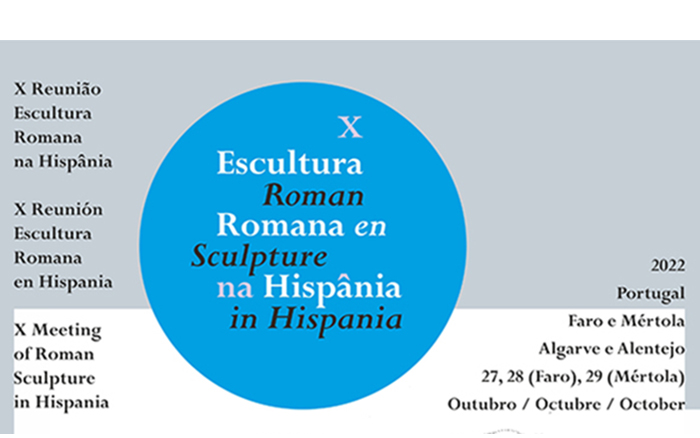
27 > 28 OUTUBRO 2022 I FARO // 29 OUTUBRO 2022 I MÉRTOLA
Realiza-se a X Reunião Escultura Romana na Hispânia, nos dias 27 e 28 de Outubro, em Faro, Algarve, e no dia 29 de Outubro em Mértola, Alentejo.
O programa, para além de um ciclo de conferências, inclui visitas às esculturas romanas no Museu Municipal de Faro e à cidade de Mértola e um concerto de guitarra portuguesa.
Organização:
Universidade do Algarve, Faculdade de Ciências Humanas e Sociais / Centro de Estudos em Arqueologia, Artes e Ciências do Património (CEAACP)
Universidade de Lisboa, Faculdade de Belas-Artes / Centro de Investigação e Estudos em Belas-Artes (CIEBA)
Câmara Municipal de Faro / Museu Municipal de Faro
Direção Regional de Cultura do Algarve
Campo Arqueológico de Mértola
Museo Nacional de Arte Romana
ARcTic South
Oct 11 2022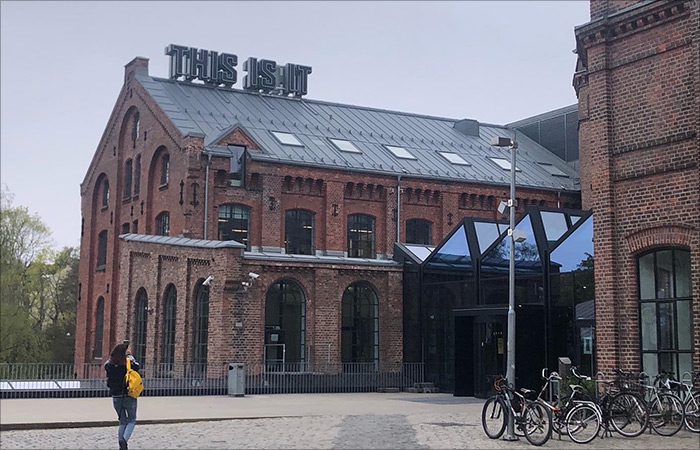



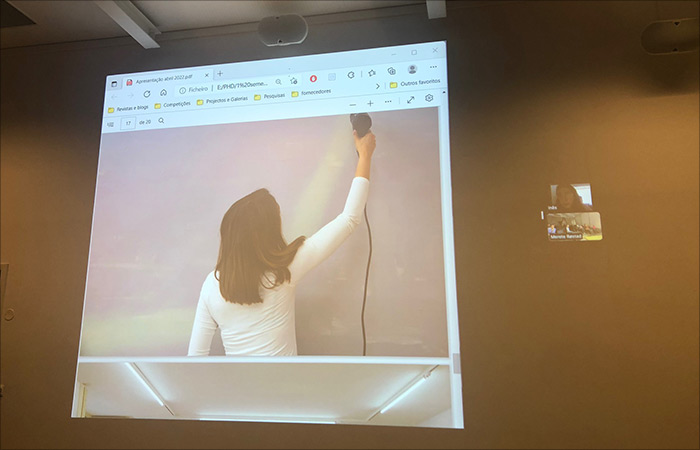
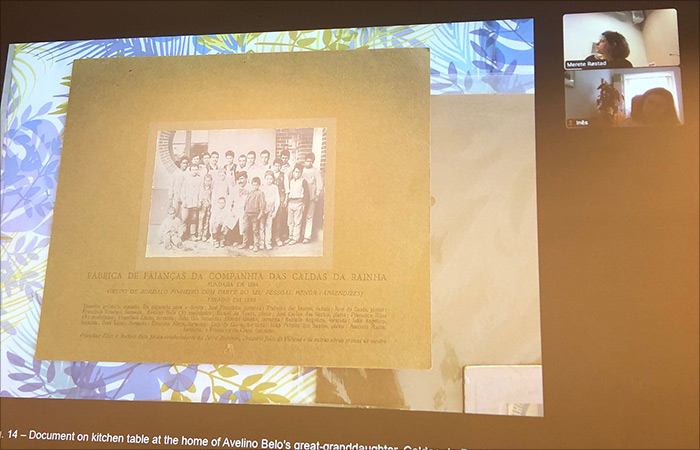

JANUARY > OCTOBER 2022
Higher artistic education can be considered an important space for artistic experimentation and critical discourse. The Faculdade de Belas-Artes da Universidade de Lisboa (FBAUL) and the Oslo National Academy of Art (KHIO), through its Arts & Crafts department, consider themselves as institutions committed to Artistic Research (AR), in their education, training and development, want to share and think together about AR and future North-South collaborations. Thus, ARcTic South is a joint thought project, seeking to strengthen the connection between academic artistic practices from northern and southern Europe, dismantling the practice of AR, its diffractions and emerging contact zones, as well as the possible (un)doings. the practice of artistic research.
The ARcTic South project is funded by the EEA Grants bilateral initiative program between FBAUL (promoter) and the Arts & Crafts department of the National Academy of Art in Oslo (Partner). The project is led and initiated by Helena Elias and Merete Røstad and will run between January and October 2022.
Stay tuned!
FBAUL has met KHIO in Oslo. Now it is time for KHIO to visit FBAUL in Lisbon
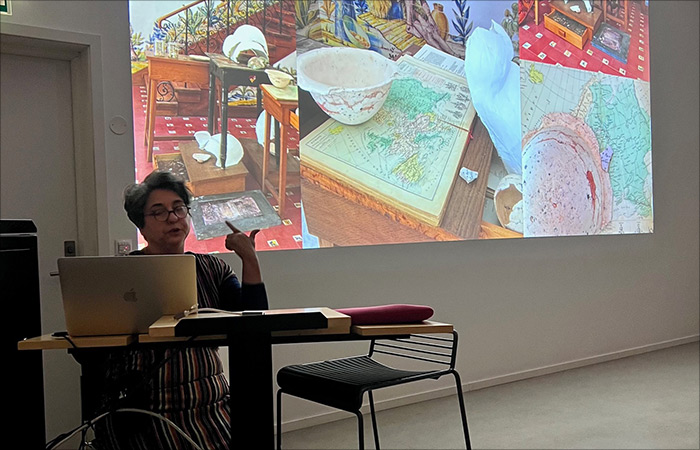
Last April, the FBAUL team of Arctic south, an EAA grant project, has visited KHIO. The Arctic south team held the seminar Mining the borders of Artistic Research.
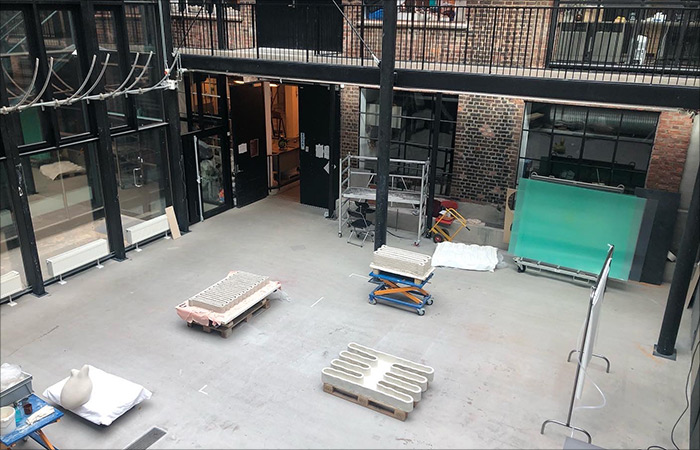
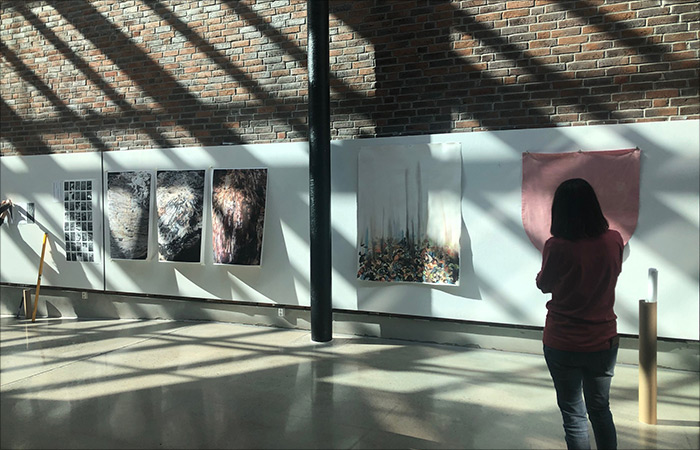
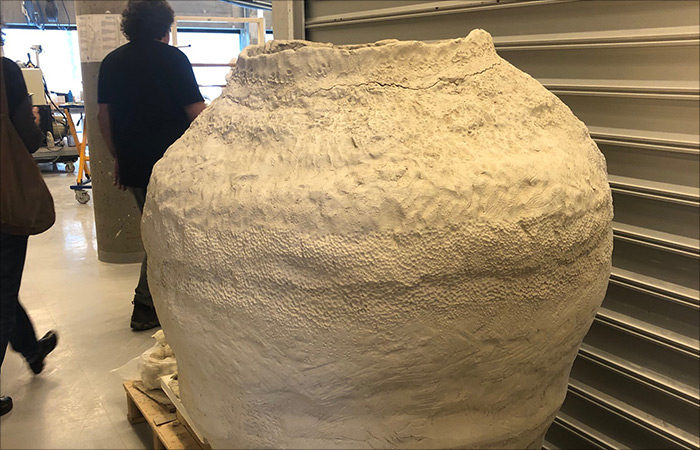
This was an opportunity to share undergoing artistic research from both institutions, with presentations of educators, artist researchers and PhD fellows. During the three days of the event, a pop exhibition was displayed, with artistic research works of the Arctic south team.
Now it’s time to KHIO visit FBAUL
ARcTIC SOUTH CONFERENCE (POSTER)
Merete Røstad
Tiril Schrøder
Siri Hermansen
Lagoa Henriques Auditorium
On the 8th of June 10 Am, Professors Merete Røstad, Tiril Schrøder, Siri Hermansen from the National Academie of Arts of Oslo (KHIO) will present their artisitc works on behalf of the ARcTic South project, sponsored by the EEA Grants.
ARcTIC SOUTH WORKSHOP (POSTER)
MINING/BORDERS/CARE
The ARcTic South workshop will happen on the 8th and 9th of June at FBAUL. It is a free event specially focused on the artistic research training, and aiming to address PhD Artisitc research fellows who wish to contact and develop reserch ideas with the portuguese and Norwegian team from ARcTic South.
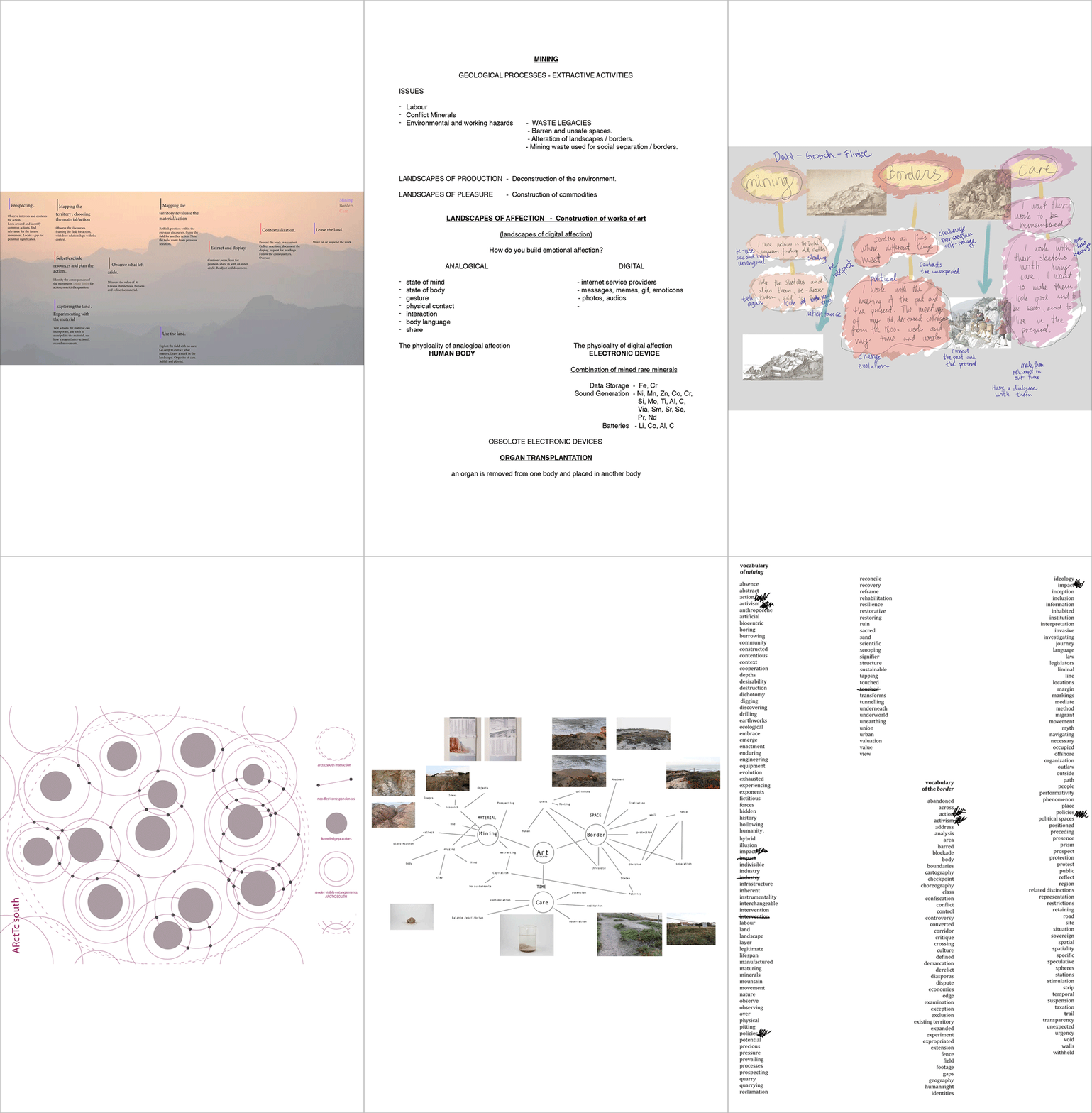
MINING/BORDERS/CARE words came out from the ARcTic South collaborative online sessions in order to curate transversely the seminar and popup exhibition entitled Mining borders of artistic research at KHIO. At the workshop these will be used has frameworks to propel field and studio work artisitc research activities.
For PhDs fellows there will be free lunch and coffe breaks.
The REGISTRATION is required, considering that there are only 4 places available, by sending an e-mail to book.arcticsouth@gmail.com until the 6th of June.
The workshop results wil be presented at the MNAC, on the 9th June, 5.30 PM.
During the KHIO residence at FBAUL, a pop up EXHIBITION with the artistic research works of ARcTic South team will be on display.
JANUARY > OCTOBER 2022 I FBAUL AND KHIO
Art education is an important space for experimentation and critical discourse. As Art institutions commit to artistic research (AR) as part of education, training and development. FBAUL and the Art and Craft department at Oslo National Academy of the Art (KHIO) aim to share and think together on AR and futures of collaborative research between North-South. ARcTic South is thus a thinking together project aiming to get closer North and South academic artistic practices, unpack the practice of AR, diffract and emerge contact zones as well possible (un)doings on making artistic research.
ARcTic South is funded by the EEA Grants bi-lateral initiative program between FBAUL (promoter) and the Art and Craft department at Oslo National Academy of the Art (Partner). The project is led and initiated by Helena Elias and Merete Røstad and will run between January and October 2022. Stay tuned!
ARCTIC SOUTH EEA Grants financed project
FBAUL_KIHO research seminar MINING THE BORDERS OF ARTISTIC RESEARCH
27th April_29th April, National Academy of Arts, Oslo
FBAUL/KHIO Conversations: Intertwining a cartography of common affections in Artistic Research (AR)
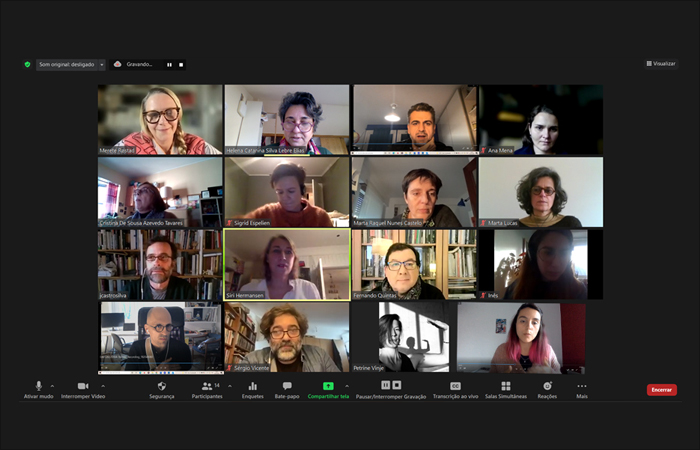
Mining/Caring/Bordering: We have gone through six sessions taking on board ways of getting to know each other and we have created verbal and visual maps of common interests in research. By this means we have configured a cartography of common affection that opens channels to bridge or to cope, even if team members are in a diverse state of being (solid, gas, liquid, or gel, to metaphor physical states matter) whether as Professors, Phd Students, Researchers, Artists, Educators.
Nevertheless, to think and practice AR collaboration in different states means to (re)configure a research culture of practices to tune and shape circumstantial infrastructures in order to share. Since AR has been a trendy buzz word in Higher Education Institutions (HEIs), artists, academics, theoreticians, curatorial networks, Art institutions and HEIs, have attempted to offer their perspectives and views, regardless of the different institutional legacies that compose the European Arts HEIs .
We feel we are potentiating the emergence of a community of practice in AR. The novelty of the project ARcTic South is that is happening through the terrain of a practice of thinking together among artists practitioners to approach the subject of AR within HEIs that already have a tracking on such commitment. These conversations have brought us an assemblage process of meaning making while pointing to emergent questions to deal at the seminar and workshop, respectively happening in Oslo and Lisbon. These assembled processes have been shaped through intra-actions, in order to bring borderless open fields, landscapes, nomadic constellations and geologies. More to come!
*helena elias
https://orcid.org/0000-0003-2743-8814
ARcTic South – Project Leader
https://www.belasartes.ulisboa.pt/en/arcticsouth/
member of the artistic research project MEMORY WORK
https://memorywork.no/
ARcTic South
Coordination: Helena Elias and Merete Rostad
Organizing committee
Helena Elias, Claudia Pauzeiro, Isabel Vieira, Cristina Tavares, Sérgio Vicente, Inês Teles (PhD Stu), Noemi Iglesias (PhD Stu), Marta Lucas (PhD Stu)
Research team
Helena Elias
Fernando Quintas
João Castro Silva
Rogério Taveira
Sérgio Vicente
Ana Mena
Marta Castelo
Merete Røstad (Head of research, Associate Professor of Master program Art and Public Space, Department of Art & Craft, Oslo National Academy of the Arts - KHIO)
Tiril Schrøder (Professor of Print and Drawing, Department of Art & Craft, Oslo National Academy of the Arts - KHIO)
Siri Hermansen (Professor and Head of Master program Art and Public Space, Department of Art & Craft, Oslo National Academy of the Arts - KHIO)
Sigrid Espelien (PhD student, Ceramic, Department of Art & Craft, Oslo National Academy of the Arts – KHIO)
Shwan Dler Qaradaki (PhD student, Print and Drawing, Department of Art & Craft, Oslo National Academy of the Arts - KHIO)
Inês Teles PhD student FBAUL
Noemi Iglesias PhD student FBAUL
Marta Lucas PhD student FBAUL
Research committee
Cristina Tavares (Vice President FBAUL)
Fernando António Baptista Pereira (President FBAUL)
Fernando Quintas (member of the board of direction VICARTE-FBAUL)
Luís Jorge Gonçalves (President of the pedagogical committee of FBAUL and vice-president of CIEBA)
Márcia Vilarigues (Director of VICARTE)
Cristina Pratas Cruzeiro (Researcher FCSH – IHA)
Rogério Taveira (head of Master Multimedia Art -FBAUL)
Teresa Mendes Flores (ICNova- UNL)
Teresa Almeida (FBAUP-VICARTE)
Sara R. Yazdani (Associate Professor of Art Theory and Art History, Department of Art & Craft, Oslo National Academy of the Arts – KHIO)
Siri Hermansen (Professor and Head of Master program Art and Public Space, Department of Art & Craft, Oslo National Academy of the Arts – KHIO)
Documentation team
Rogério Taveira
Fernando Fadigas
centenário Jorge Vieira – mesa-redonda
Oct 10 2022
25 OUTUBRO | 18h30 | FUNDAÇÃO CALOUSTE GULBENKIAN | AUDITÓRIO 3
A Biblioteca de Arte convida a assistir à mesa-redonda sobre o escultor Jorge Vieira, com a participação da jornalista Ana Sousa Dias, dos historiadores de arte Pedro Lapa e Leonor Oliveira e do escultor Rui Chafes.
Esta conversa assinala a doação à Fundação Calouste Gulbenkian do Espólio Jorge Vieira e celebra o centenário do nascimento do escultor.
Paralelamente, entre 12 de outubro e 7 de novembro, mostram-se no átrio da Biblioteca alguns documentos que integram o Espólio e algumas obras de Jorge Vieira pertencentes ao acervo do CAM.
Jorge Vieira foi professor na Faculdade de Belas-Artes na Universidade de Lisboa.
Conferência – EL DIBUJO DINÁMICO: un acercamiento al concepto de dibujo en movimiento
Oct 10 2022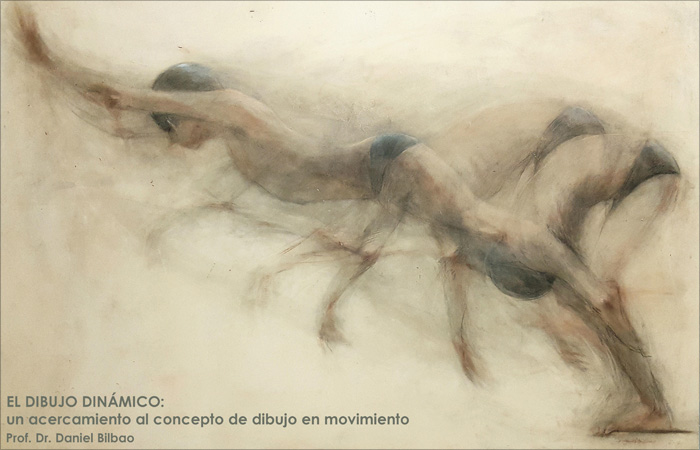
20 OUTUBRO | 17h00-19h00 | AUDITÓRIO LAGOA HENRIQUES
Conferência - EL DIBUJO DINÁMICO: un acercamiento al concepto de dibujo en movimento
Professor Daniel Bilbao Peña
Desenho dinâmico: uma abordagem ao conceito de desenho em movimento
Desde as suas origens, o ser humano tem demonstrado um interesse acentuado em representar o movimento. Os recursos plásticos e conceptuais têm evoluído permanentemente tentando aplicar fórmulas que conseguem expressar sensações dinâmicas a partir de abordagens artísticas. Esta palestra pretende mostrar os marcos mais relevantes nesta pesquisa historicamente obsessiva e como chegar a soluções gráficas baseadas no desenho a partir da vida utilizando conceitos académicos actuais.
Público-alvo
A conferência é especialmente dirigida a alunos do curso de Doutoramento em Belas-Artes (seminário em “Metodologias de Investigação Artística” na especialidade de Desenho) e também a alunos do curso de mestrado em Desenho e alunos de “Didática do Desenho” (do mestrado em Educação Artística).
Está também aberta a toda a comunidade escolar – alunos de qualquer grau e professores.
Gratuito e não requer inscrição. Sujeita à lotação da sala.
Professor Daniel Bilbao Peña
Faculdade de Belas-Artes da Universidade de Sevilha, Coordenador do Departamento de Desenho e atualmente também Diretor da mesma Faculdade; é pintor e tem uma larga experiência em projetos de investigação artística; tem colaborado com a FBAUL e encontra-se presentemente a desenvolver um projeto de investigação no CIEBA.
Organização
Américo Marcelino, Departamento de Desenho/ CIEBA – Grupo de Investigação em Desenho.
Financiamento
FCT
MasterClass – El dibujo del modelo humano en movimiento
Oct 10 2022
21 OUTUBRO| 14h00-17h00 | SALA 2.34
MasterClass - El dibujo del modelo humano en movimiento
Professor Daniel Bilbao Peña
O desenho de modelo humano em movimento
A partir do modelo humano nu, estabelecemos análises paramétricas baseadas no factor tempo, velocidade, proporção e valores de luz aplicados à anatomia (teoria 30′ + exercícios práticos de desenho de modelo de movimento 2h, aproximadamente + análise de resultados).
Público-alvo
A masterclass é especialmente dirigida para os alunos do mestrado em Desenho, mas também estão abertas inscrições para alunos de qualquer grau ou curso que estejam interessados em desenho de modelo (de nível avançado).
Gratuito, mas obrigatória a inscrição (20 vagas).
INCRIÇÕES ENCERRADAS
Professor Daniel Bilbao Peña
Faculdade de Belas-Artes da Universidade de Sevilha, Coordenador do Departamento de Desenho e atualmente também Diretor da mesma Faculdade; é pintor e tem uma larga experiência em projetos de investigação artística; tem colaborado com a FBAUL e encontra-se presentemente a desenvolver um projeto de investigação no CIEBA.
Material recomendado
Papel cinzento ou papel jornal pardo ou basik (em rolo ou formato A2/A1), carvão vegetal natural com cerca de 1 cm de espessura, trapos, um esfuminho de 1,5 cm de diâmetro e uma borracha de apagar.
Organização
Américo Marcelino, Departamento de Desenho/ CIEBA – Grupo de Investigação em Desenho.
Financiamento
FCT
lV congresso ibero-americano investigações em conservação do património
Oct 10 2022
12 OUTUBRO 2022 I PRESENCIAL E VIA ZOOM: MUSEU DA FARMÁCIA
13 > 14 OUTUBRO 2022 I PRESENCIAL E VIA ZOOM: FBAUL
17 > 18 OUTUBRO 2022 I EXCLUSIVAMENTE ONLINE // VIA ZOOM
IV Congresso Ibero-Americano Investigações em Conservação do Património, este ano subordinado ao tema “Práticas Sustentáveis no Património”.
Terá lugar entre 12 e 14 de Outubro de 2022, presencialmente e com transmissão online (viaZoom), no Museu da Farmácia e na Faculdade de Belas-artes da Universidade de Lisboa e exclusivamente online (viaZoom) nos dias 17 e 18 de Outubro 2022.
Queremos reunir experiências aplicadas em grandes espaços como museus, instituições culturais ou em intervenções complexas em C&R, mas também reunir soluções sustentáveis adaptadas a obras de menor dimensão. Esperamos descobrir como os profissionais de conservação e restauro são capazes de se adaptar a diferentes situações, sem a necessidade de grandes recursos financeiros. Consideramos necessário partilhar experiências que nos ajudem a enfrentar o desafio da sustentabilidade no nosso campo de uma forma abrangente.
PROGRAMA PRELIMINAR_PRESENCIAL_DIAS 12-13-14 OUTUBRO
PROGRAMA PRELIMINAR_ONLINE_DIAS 17-18 OUTUBRO
INSCRIÇÕES ENCERRADAS
Este evento é resultado da parceria de investigadores da Faculdade de Belas-Artes da Universidade de Lisboa com investigadores do:
Museu da Farmácia de Lisboa
Grupo Espanhol do IIC
Instituto Nacional de Antropología e Historia de México
Facultad de Filosofía y Letras, Universidad Nacional Autónoma de México (FFyL-UNAM)
Rede dos Profissionais de Conservação e Restauro da Universidade Federal da Bahia (RECORE/UFBA), Brasil
Instituto Federal do Piauí, Brasil
Centro de Conservación y Restauración del Patrimonio – UTEC | Universidad de Ingeniería y Tecnología
Toda a informação sobre o evento está disponível no website oficial do Congresso:
Este evento é passível de ser filmado e/ou fotografado para posterior publicação.
Discriminating Data, a conversation with Wendy Chun
Oct 01 2022
11 OCTOBER 2022 | 18h30 | GRANDE AUDITÓRIO DA FBAUL
Free entry, booking required
Organised by CADA in partnership with the Lisbon Architecture Triennale and the Faculty of Fine Arts, University of Lisbon (Departments of Communication Design and of Multimedia Arts), as part of the public talks programme Human Entities 2022: culture in the age of artificial intelligence.
Discriminating Data, a conversation with Wendy Hui Kyong Chun
(Canada 150 Chair in New Media, Director, Digital Democracies Institute)
In Discriminating Data [2021], Wendy Hui Kyong Chun reveals how polarization is a goal—not an error—within big data and machine learning. These methods, she argues, encode segregation, eugenics, and identity politics through their default assumptions and conditions. Correlation, which grounds big data’s predictive potential, stems from twentieth-century eugenic attempts to “breed” a better future. Recommender systems foster angry clusters of sameness through homophily. Users are “trained” to become authentically predictable via a politics and technology of recognition. Machine learning and data analytics thus seek to disrupt the future by making disruption impossible.
In this conversation, Chun will discuss the themes of her book with Andrea Pavoni, assistant research professor at DINAMIA’CET and then take questions from the audience.
The talk will be in English and followed by a Q&A session.
Wendy Hui Kyong Chun
Wendy Hui Kyong Chun is the Canada 150 Research Chair in New Media at Simon Fraser University, and leads the Digital Democracies Institute. She studied Systems Design Engineering and English Literature, which she combines in her current work on digital media, and is the author of Control and Freedom: Power and Paranoia in the Age of Fiber Optics (2006), Programmed Visions: Software and Memory (2011), Updating to Remain the Same: Habitual New Media (2016) and, more recently, Discriminating Data (2021).
https://www.sfu.ca/communication/team/faculty/wendy-chun.html
https://mitpress.mit.edu/books/discriminating-data
https://twitter.com/whkchun
This event is part of the public talks programme Human Entities 2022: culture in the age of artificial intelligence, Sixth edition, organised by CADA in partnership with the Lisbon Architecture Triennale. Conversation with Wendy Chun organized in partnership with the Faculty of Fine Arts, University of Lisbon (Departments of Communication Design and of Multimedia Arts).
Funded by: República Portuguesa – Cultura / Direção-Geral das Artes
Support: Câmara Municipal de Lisboa, DINAMIA’CET (ISCTE-IUL) and NOVA LINCS through FCT.IP funds
Design: Marco Balesteros (LETRA)
Photography: Joana Linda
arte e turismo: uma relação valorosa?
Sep 10 2022
28 SETEMBRO 2022 I UNIVERSIDADE LUSÓFONA
Do ponto de vista da viagem, a arte está inserida numa vasta subdivisão dentro do conceito de turismo cultural, pois se estende desde às artes visuais (tradicional, moderna, aplicada e decorativa), artes performáticas (peças de teatro, concertos musicais) até à literatura. Para a sua devida utilização pelo turismo é necessária toda uma estrutura patrimonial e equipamentos disponíveis, que constituem em parte, o ponto de partida da atividade turística, como museus, catedrais e igrejas, castelos, casas históricas, galerias de arte, teatros e salas de concerto. Devido a essa abrangência, a arte é reconhecida como o principal recurso do patrimônio cultural destinado ao uso turístico (Hughes, 2004, Jafari & Xiao, 2015).
Já no sentido inverso, o turismo é importante para as artes, pois estabelece rendimentos, instiga novas formas de arte, ajuda a ampliar o público consumidor para fora das fronteiras, fortalece a identidade e valores das pessoas envolvidas. Desse modo, a relação arte e turismo pode salvaguardar aspectos, que ultrapassam os patrimônios tangíveis e atingem também os intangíveis, melhorando de sobremaneira o potencial de desenvolvimento sustentável do destino. Para além disso, o turismo poderá contribuir para o uso da arte como meio de subsistência, principalmente em regiões remotas com valiosos recursos culturais, tais como o folclore e o costume (Rowan, 2013).
A partir dessas associações propomos a realização de uma mesa-redonda que provoque o corpo discente dos cursos de artes visuais e turismo para uma reflexão entre essas áreas, que há muito tempo estão relacionadas. Durante os séculos XVI e XVIII o papel cultural da viagem foi fundamental para a arte, pois possibilitou o desenvolvimento das carreiras artísticas, através do contato com a arte da antiguidade e encontro com os grandes mestres do Renascimento italiano, facilitou a difusão de obras de arte e do património antigo entre diferentes sociedades e corroborou com a documentação das terras colonizadas por meio das expedições científicas e missões artísticas. Nesse contexto, a ideia de viagem desenvolveu-se como prática sociocultural, concomitantemente com a pintura de paisagem, que ascendia como género dominante na Europa. Por um lado, a expansão e exploração imperial, por outro o desenvolvimento da imaginação por registos topográficos com mais personalidade artística que contribuíram para o reconhecimento dos ilustradores como artistas viajantes (Quilley, 2012). Depois do século XIX, devido aos avanços tecnológicos produzidos a partir da Revolução Industrial (1760-1840), a viagem se tornou discurso e fundamento teórico nos processos imaginativos, do tradicional diário de viagem, a chegada da tecnologia pela fotografia, seguida pelo vídeo, favoreceram o desenvolvimento de outras criações estimuladas pela viagem, que também passou por transformações com a evolução dos meios de transportes.
Referências
Hughes, H. (2004). Artes, entretenimento e Turismo. São Paulo: Roca.
Jafari, J. & Xiao, H. (Ed.). (2015). Encyclopedia of tourism. London: Springer.
Quilley, Geoff (2012). Re-enacting Art and Travel. Art & Environment.Tate Papers, n.17, Spring.Retrieved from:https://www.tate.org.uk/research/publications/tate-papers/17/re-enacting-art-and-travel
Rowan, Jane (2013). Art for sustainable livehoods: workshops, cultural heritage tourism and festivals. In: Sarmento, João Brito-Henriques, Eduardo (Ed.). Tourism in the global south: heritages, identities and development. Lisboa: Centro de Estudos Geográficos. 157-178.
urban creativity
Jul 05 2022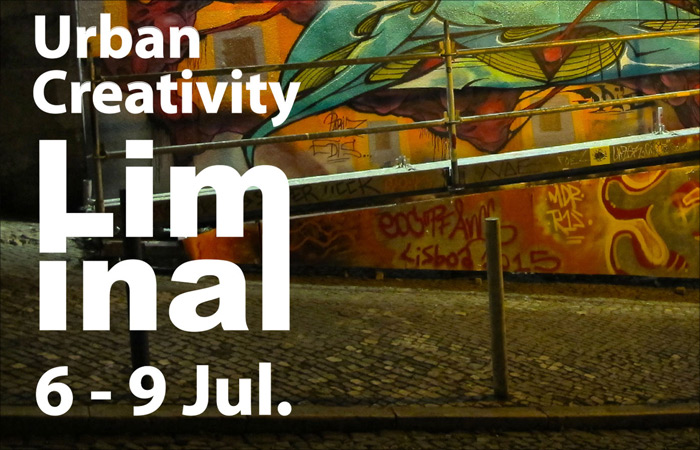
6TH > 9TH JULY I FBAUL
Conference from 7th to 9th of July – Auditorium of the Faculty of Fine Arts of Lisbon (and remote)
Activities July 6th to 9tH
DXD Open (Lagoa Henriques Auditorium)
Meeting of Styles Lisbon Warm UP (Calçada da Glória)
LIMINAL is the 2022 theme. Liminality is the quality of ambiguity or disorientation that occurs in the middle stage of a rite of passage, when participants do not maintain their pre-ritual status but have not yet begun the transition to the status they will have when the rite is complete. Terms such as abandonment and ruin exemplify a presence with liminality, as a phenomenon that gradually disperses into the progressive placidity of an urban setting. Of course, the adverse context of post-pandemic uncertainty and the multiple national and international crises of today cannot be overlooked.
The conference is for the first time in a hybrid format with the participation of approximately 20 speakers locally and 20 remotely. As usual, it is assumed to be a reference event, markedly international, with the participation of experts from more than 22 nationalities.
The local participation of Anton Polsky, an academic and creator from Moscow, should be highlighted, he will present a critical reflection on “Street Art during the Russian invasion of Ukraine”.
We are pleased to include in our program the Graduate Show: DXD Open and to simultaneously carry out plastic interventions on the Calçada da Glória, an activity resulting from the international call for works in collaboration with the renowned international event Meeting of Styles.
Finally, it is important to mention that Urban Creativity is an event associated with a growing publication activity, 5 Scientific Journals, and several annual monographs.
General link: https://www.urbancreativity.org/
Journals: https://journals.ap2.pt/
Team:
Pedro Soares Neves – Executive direction UC/AP2
Monica Mongelli – Project Manager (Erasmus+ Traineeship)
Vêronique Van Grieken – YYCS – Yes You Can Spray
Rafael Mooza – MOS – Meeting of Styles Portugal
Samantha Almeida – MOS – Meeting of Styles Portugal
Contacto: info@urbancreativity.org
Urban Creativity Conference and Activities,
9th edition, 2022 have the support of:
FBAUL – Faculdade de Belas Artes da Universidade de Lisboa
CIEBA – Centro de Investigação e Estudos de Belas Artes
CML / GAU – Galeria de Arte Urbana
YYCS – Yes You Can Spray
MOS – Meeting of Styles Portugal
xCoAx 2022: 10th International Conference on Computation, Communication, Aesthetics and X
Jul 05 2022
06 > 08 JULY 2022 I CONVENTO SÃO FRANCISCO, COIMBRA, PORTUGAL
The Keynotes will be accessible to the geral public.
Winnie Soon (Aarhus University) will be talking about “Coding Otherwise for SOFTer Futures” on Thursday, July 7 at 18:15, whereas Andreas Brockmann (Leuphana University) will present “Technoscience – Domination – Resistance” on Friday, July 8 at 18:00.
The xCoAx Exhibition, which has always been one of the key elements of xCoAx’s engagement with the local public, can be enjoyed by all, starting on Wednesday, July 6, at 6:30 PM, and
will be on display until September 4.
See you there.
ll Encontro “Acessibilidade e Inclusão na Arte e no Património”
Jun 21 2022
24 > 25 JUNHO 2022 I GRANDE AUDITÓRIO, FACULDADE DE BELAS-ARTES E VIA ZOOM
Apresentação
O II Encontro “Acessibilidade e Inclusão na Arte e no Património” é uma iniciativa da Faculdade de Belas-Artes da Universidade de Lisboa e do Museu da Farmácia, que decorrerá nos dias 24 e 25 de junho de 2022.
Tem como objetivo ser um espaço de discussão e troca de ideias, reunindo trabalhos associados à acessibilidade à arte e ao património cultural. Divulgando estratégias que visam melhorar o acesso e a inclusão dos diversos públicos ao património.
Enquadramento
Na primeira edição, em 2021, o Encontro entregou o evento temático, Ciclo de Conferências “Encontros no Largo das Belas-Artes”, organizado pelo Grupo de Investigação e Estudos em Ciências da Arte e do Património “Francisco de Holanda”, do CIEBA. Neste foram abordados diversos temas relacionados com a acessibilidade e inclusão de pessoas com deficiências à arte e ao património, bem como estratégias de inclusão dos públicos num âmbito social.
Pretende-se, com esta segunda edição expandir as temáticas abordadas, tentando abranger mais aspetos que são focados pelo termo acessibilidade. O conceito de acessibilidade “aplica-se às estratégias, ações e recursos criados para eliminar barreiras físicas, mas também intelectuais ou sociais, para permitir o usufruto por parte da maioria das pessoas. Cobre, por isso, campos tão diversos quanto a entrada e circulação no edifício, mas também a sinalética, a comunicação e a divulgação, a segurança, a consultoria, o emprego e voluntariado por parte de pessoas com deficiência ou incapacidade, a formação das equipas, a avaliação das práticas correntes para promover o acesso de todos e a política de gestão relativa a todas estas questões, incluindo o preço do bilhete de entrada” (Mineiro coord., 2017, 9-10).
Objetivos
A 2ª edição do encontro “Acessibilidade e Inclusão na Arte e no Património” visa reunir investigações, no âmbito da acessibilidade e inclusão, em mestrados, doutoramentos e pós‑doutoramentos, bem como projetos desenvolvidos em contexto profissional.
O encontro pretende ser um espaço de discussão e reflexão, sobre estratégias que visam melhorar o acesso e a inclusão dos diversos públicos ao património, nomeadamente os públicos com deficiências.
O evento tem como objetivos, no seguimento da primeira edição, a apresentação de trabalhos relacionados com a acessibilidade ao património, a divulgação de estratégias que permitam pessoas com deficiências aceder aos bens culturais e a promoção de projetos que mitigam desigualdades.
Público-alvo
É dirigido a profissionais e académicos que desenvolvam trabalho na área da acessibilidade a museus e património cultural, bem como jovens investigadores de mestrado, doutoramento e pós-doutoramento. Estendendo-se a todos os que tenham interesse em participar do público em geral.
Línguas Oficiais
As línguas oficiais do II Encontro “Acessibilidade e Inclusão na Arte e no Património” serão o Português, o Espanhol e o Inglês.
Linhas Temáticas
I – Teoria e legislação sobre acessibilidade e inclusão do património
II – Avaliação da acessibilidade nos museus
III – Experiências multissensoriais em museus e monumentos
IV – Desenvolvimento de produtos que promovam acessibilidade em museus
Inscrição
O evento é gratuito mas a INSCRIÇÃO é obrigatória
O Encontro será presencial e com transmissão online (via Zoom) na Faculdade de Belas-Artes da Universidade de Lisboa.
INSCRIÇÕES ENCERRADAS
Comissão Organizadora do Encontro Acessibilidade e Inclusão na Arte e no Património
Ana Bailão (FBAUL-CIEBA/UCP-CITAR)
Ana Sofia Neves (FBAUL-CIEBA)
Fernando Fadigas (FBAUL)
Frederico Henriques (UCP-CITAR)
Inês Simões (FBAUL)
João Neto (Museu da Farmácia)
Marta Aleixo (FBAUL-CIEBA)
Maria Teresa Sabido (FBAUL)
Patrícia Mendes (FBAUL)
Comissão Científica
Cristina Azevedo Tavares (FBAUL-CIEBA)
Eduardo Duarte (FBAUL-CIEBA)
Fernando António Baptista Pereira (FBAUL-CIEBA)
Patrícia Roque Martins (FCSH-IHA)
Viviane Panelli Sarraf (IEB-USP/FAPESP/PUC-SP)
Comissão Técnica
Filipa Lopes (FBAUL)
Ana Carvalho (FBAUL)
Ana Rita Monteiro (FBAUL)
Beatriz Clemente (FBAUL)
Datas importantes
Data limite para a submissão de resumos – até 27 de fevereiro de 2022
Notificação dos autores – 11 de março de 2022
Divulgação do programa – 18 de março de 2022
Qualquer questão contactar acessibilidade.evento@gmail.com
ITI TALKS — Science communication – what’s in it for researchers?
Jun 12 2022
DECEMBER 16TH 2022 > 4 PM
We had to change the date and time of the next ITI Talks to Friday afternoon at 4 PM.
I would kindly ask you to answer the google form once again until Wednesday, for us to prepare the space according to the number of attendees:
https://forms.gle/uFnEExQNEzytjCJB6
December 16th at 4 PM (Friday)
Joana Lobo Antunes – “Science communication – what’s in it for researchers?”
Lunch will be provided after the talk for in-person atendees at both Lisbon and Funchal
“Science isn’t finished unless it is communicated”, as stated by Sir Mark Walport translates in a very simple way that doing research isn’t an end to itself. Until the knowledge created in the research units is translated into something meaningful for lay audiences it hasn’t yet fulfilled its purpose. However, researchers are already doing science and so many other related tasks, why should they also pitch in with communication activities? What’s in it for them and their work? We will discuss the benefits for researchers and also point out good practices in conveying complex science to non experts, and how to better interact with other stakeholders.
Bio: Joana Lobo Antunes is head of Communication at Instituto Superior Técnico and lecturer in Science Communication and Social Media for Scientists, at Universidade Nova de Lisboa. She is coordinator of the science radio show 90 Segundos de Ciência (since 2017), the multimedia program Explica-me como se tivesse cinco anos (since 2020) and the science podcast 110 histórias | 110 Objetos (since 2021). Previously, Joana was Head of Communications at ITQB NOVA (2016-2019), former Director at Centro Ciência Viva de Sintra (2014-2016), and researcher in Promotion and Administration of Science and Technology (2012-2015). Additionally, she was founder and former President of Portuguese Science Communicators Network, known as SciComPT.
Seminário de Residências Artísticas: Ponto(s) de Situação Contextos, mapeamentos e estratégias de programação
May 01 2022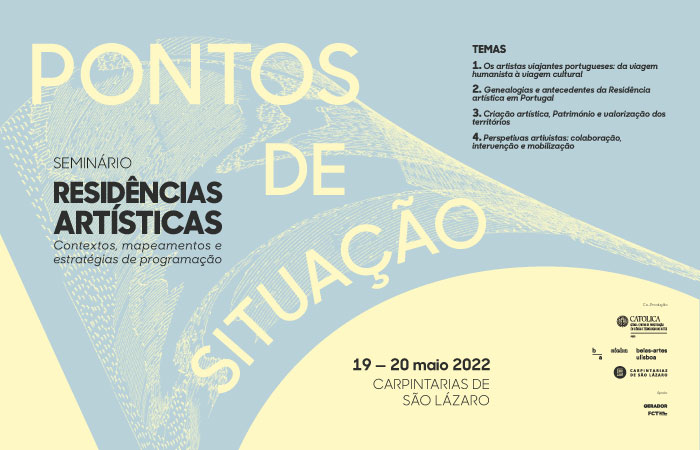
19 > 20 MAIO 2022 I 11H00 – 18H00 I CARPINTARIAS DE SÃO LÁZARO
Acesso livre, com inscrição obrigatória.
Desde a eclosão dos programas de residência artística como fenómeno global na última década do século XX, tem vindo a confirmar-se a tendência de crescimento e diversificação deste modelo operativo no contexto (inter)nacional. O presente encontro, aberto à participação do público, procura convocar diversas vozes e abordagens, para um debate alargado sobre o panorama das residências artísticas em Portugal, refletindo o caráter multifacetado e polivalente dos diversos agentes e práticas mobilizadas em torno deste modelo.
Partindo de uma perspetiva histórica que permita contextualizar o panorama cultural e artístico português, procura-se ir ao encontro da afirmação contemporânea das residências artísticas, enquanto veículo privilegiado para a promoção da criação artística, mas também enquanto plataforma de intervenção política, económica e social. Nesse sentido, convidámos um conjunto de 12 oradores – investigadores, professores, artistas, curadores e (outros) representantes de instituições culturais – para um debate estruturado em quatro 4 painéis temáticos:
- Os artistas viajantes portugueses: da viagem humanista à viagem cultural;
- Genealogias e antecedentes da Residência artística em Portugal;
- Património e valorização dos territórios;
- Perspetivas artivistas: colaboração, intervenção e mobilização.
O seminário terá lugar entre os dias 19 e 20 de maio de 2022, nas Carpintarias de São Lázaro, com o apoio do Centro de Estudos e Investigações em Belas-Artes (CIEBA) – Universidade de Lisboa, Centro de Investigação em Ciência e Tecnologia das Artes (CITAR) – Universidade Católica Portuguesa, Fundação para a Ciência e Tecnologia (FCT) e Academia Gerador.
+INFO: https://www.carpintariasdesaolazaro.pt/ponto-de-situa%C3%A7ao